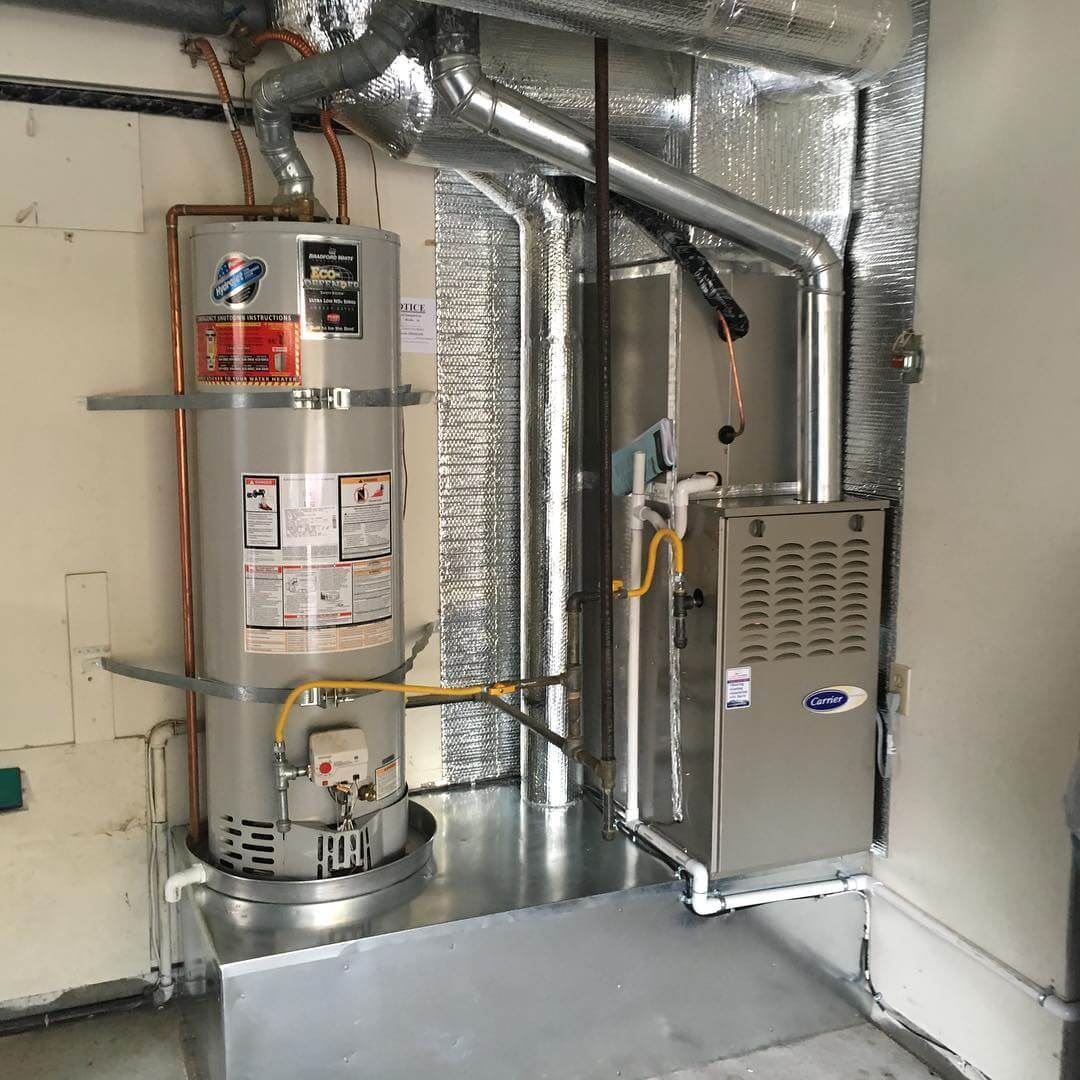
You wake up to a cold house and realize there is no heat.
Whether it is the middle of the night or early morning before work, a heating failure is stressful — especially during a Long Island winter when temperatures can drop into the teens. The good news is that some no-heat situations have simple fixes you can handle in minutes. Others require a professional, but knowing what to check first can save time and help your technician diagnose the problem faster.
Here is exactly what to do when you have no heat in the house.
First: Is Anyone in Danger?
Before troubleshooting, assess the situation:
- If you smell gas — Leave the home immediately. Do not use any light switches or electronics. Call your gas utility from outside. Do not re-enter until cleared.
- If the carbon monoxide detector is alarming — Evacuate immediately and call 911. Carbon monoxide is odorless and deadly.
- If the home is already dangerously cold (below 50°F) with elderly, infants, or medically vulnerable people present — prioritize getting them to a warm location while you troubleshoot or wait for repair.
If none of the above apply, proceed with the troubleshooting steps below.
Step-by-Step: What to Check When You Have No Heat
1. Check the Thermostat
Start here — it takes 30 seconds and resolves more "no heat" calls than you might expect.
- Is it set to HEAT mode? (Not cool or fan-only)
- Is the setpoint temperature higher than the current room temperature?
- Is the display lit? If not, replace the batteries.
- Is the fan set to AUTO? (Not ON — fan-only mode blows unheated air)
If the thermostat looks correct, move to the next step.
2. Check the Circuit Breaker
Go to your electrical panel and look for a tripped breaker in the HVAC or furnace circuit. A tripped breaker sits in the middle position. Switch it fully off, then back on. If it trips again immediately, do not reset it — call for service.
3. Check the Furnace Power Switch
There is a power switch near your furnace that looks like a standard light switch. It is easy to accidentally turn off. Make sure it is in the ON position.
4. Check the Air Filter
A severely clogged filter causes the furnace to overheat and shut down on a safety limit. Pull the filter out — if it is gray and clogged, replace it. After replacing, wait 20–30 minutes before restarting to allow the furnace to cool down.
5. Check the Furnace Access Panel
Modern furnaces have a safety switch that prevents operation if the access panel is not fully closed. Press the panel firmly shut and try the thermostat again.
6. Check the Gas Supply
- Is the gas shutoff valve near the furnace open? (Handle parallel to the pipe = open)
- Are other gas appliances (stove, water heater) working? If not, the issue may be with your gas supply — call your utility.
7. Look for Error Codes
Most modern furnaces have a diagnostic LED on the control board that flashes error codes. Count the flashes and look up the code in your owner's manual or on the label inside the furnace door. Note the code before calling for service — it helps the technician arrive prepared.
8. Try the Reset Button
Many furnaces have a red or yellow reset button on the burner assembly. Press it once. If the furnace starts but shuts off again within minutes, do not press it again — call for service. Repeated resets can be unsafe.
If None of That Works: Call for Heating Repair
If you have worked through the checklist above and still have no heat, it is time to call a licensed HVAC technician. A1 Heating & Air Conditioning provides 24/7 emergency heating repair on Long Island. Call us at 631-331-2102 any time — nights, weekends, and holidays. See our full emergency HVAC service page for details.
Staying Warm While You Wait for Repair
While waiting for a technician, take these steps to keep your household safe and comfortable:
Conserve Heat
- Close doors to unused rooms to concentrate warmth in occupied areas
- Keep interior doors between rooms open to share heat
- Close blinds and curtains at night to reduce heat loss through windows
- Place rolled towels or draft stoppers at the base of exterior doors
Use Supplemental Heat Safely
- Electric space heaters can provide temporary warmth — keep them at least three feet from flammable materials
- Never leave space heaters unattended or running while you sleep
- Never use gas stoves, ovens, or outdoor grills to heat the home — this is a carbon monoxide hazard
- Never use propane or kerosene heaters indoors without proper ventilation
Protect Your Pipes
When indoor temperatures drop, frozen pipes become a real risk. Keep the thermostat set to at least 55°F. Open cabinet doors under sinks on exterior walls to allow warm air to reach pipes. If temperatures drop below 40°F inside, let faucets drip slightly to keep water moving.
Common Reasons for No Heat
When a technician arrives, these are the most likely causes they will find:
- Failed igniter — The most common furnace repair; the igniter wears out and cannot light the burners
- Dirty flame sensor — A coated flame sensor shuts the furnace down immediately after ignition
- Pressure switch failure — A faulty pressure switch prevents the furnace from starting
- Blower motor failure — The furnace may light but cannot distribute heat
- Gas valve failure — No gas reaches the burners
- Control board failure — The furnace brain stops communicating with components
- Cracked heat exchanger — A safety shutdown triggered by a serious structural issue
Boiler-Specific No-Heat Checks
If your home uses a hot water or steam boiler rather than a forced-air furnace:
- Check the boiler pressure gauge — low water pressure prevents the system from heating
- Check the pilot light if your boiler has one
- Bleed air from radiators if some are cold and others are warm
- Check the zone valves if your system has multiple heating zones
How to Prevent Future No-Heat Emergencies
The best way to avoid waking up to a cold house is annual fall maintenance. A professional heating tune-up catches developing problems — worn igniters, dirty flame sensors, low gas pressure — before they cause a breakdown in the middle of winter.
A1's Platinum Membership Plan includes annual heating and cooling tune-ups, priority emergency scheduling, and repair discounts — giving Long Island homeowners year-round protection.
Frequently Asked Questions
Why does my heat work sometimes but not others?
Intermittent heating is often caused by a dirty flame sensor, a failing igniter, or a pressure switch that is borderline functional. These problems tend to get worse over time — schedule service before the system fails completely.
My furnace turns on but shuts off after a few minutes — why?
Short cycling is usually caused by overheating (dirty filter), a dirty flame sensor, or a heat exchanger problem. It requires professional diagnosis.
How long can a house stay warm without heat?
A well-insulated home loses heat slowly — typically 1–2 degrees per hour in moderate cold. In extreme cold, heat loss accelerates. Pipes can begin to freeze when indoor temperatures drop below 55°F for extended periods.
Does A1 offer same-day heating repair?
Yes. A1 Heating & Air Conditioning offers same-day and emergency heating repair throughout Long Island. Call 631-331-2102 for current availability.
What should I tell the technician when I call?
Tell them the type of heating system you have (furnace, boiler, heat pump), the brand and approximate age if you know it, any error codes you observed, and what troubleshooting steps you have already taken. This helps them arrive prepared with the right parts.